
I’ve run 75+ businesses. Here’s why you’re probably chasing the wrong idea
Lessons from 75+ ventures on choosing businesses that actually work: target niches with paying customers, use your unfair advantage, favor 'boring' profitable ideas, and plan to scale.

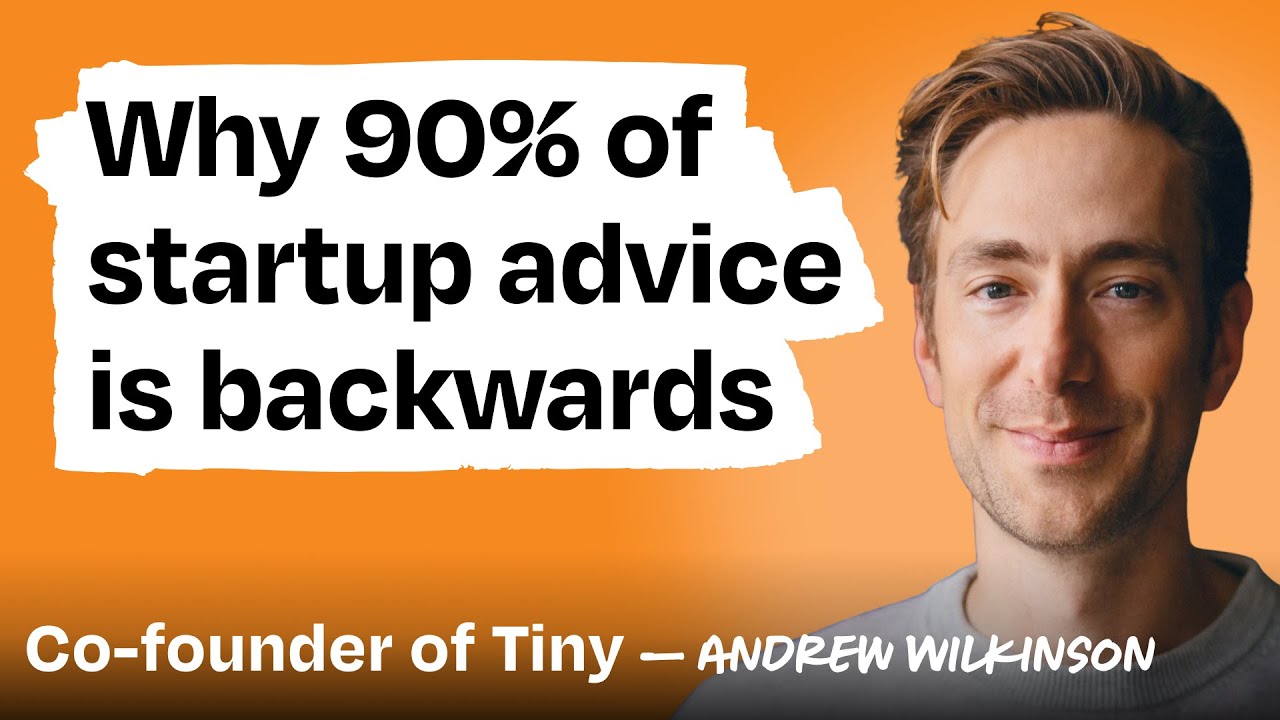
I’ve started, helped, bought, or operated well over 70 projects and companies. The patterns repeat. The same mistakes keep showing up. If you want one practical way to tilt the odds in your favor when choosing—or buying—a business, it’s simple:
Fish where the fish are.
Why “big, cool” ideas are often the wrong place to start
Most first-time founders dream big: build the next bank, the next AI unicorn, the next everything. That ambition is great—until you try to deadlift 300 pounds on day one. You need to build strength first.
There are two problems with the “everyone’s excited about it” markets:
- Competition drives margins down. The more people chasing the same customers, the tougher the economics become.
- They often require years of domain expertise, heavy capital, or massive distribution to win—things most first-time founders don’t have.
Contrast that with a small niche where customers will happily pay for a solution and competitors are few. Those markets let you get an early, decisive win. That win builds momentum, skills, and the confidence to take on bigger things.
Start small. Get the early win.
The first business I started was a web design shop. It was straightforward: talk to customers, build a website, invoice, repeat. Immediate positive feedback taught me I could build something that works. After that win, I had the confidence to keep trying—sometimes successfully, sometimes painfully not.
You don’t want to create a job you hate. Many small, physical businesses (cafes, restaurants, pizzerias) are amazing examples: unless they scale to the point where you can hire others and move to higher-level work, they remain exhausting, low-margin jobs.
Think through scale early. If you start a pressure washing business and want it to be more than a job, plan how you’ll quickly hire and offload the manual work so you can focus on sales, marketing, or whatever you enjoy.
How to find the right ideas
There are three simple heuristics I use:
- Fish where the fish are — find niches with paying customers and limited competition.
- Start where you have an unfair advantage — unique skills, networks, taste, or distribution you can exploit. Brian Armstrong started Coinbase because his background matched the problem. You should aim for that overlap between your skills and the market.
- Boring is good — the most lucrative businesses are often unsexy. Software that automates form filling for government assistance or a company that cleans restaurant exhausts can be massively profitable and low-drama.
If you’re unsure whether a problem is valuable, figure out the economics. How much does solving this problem save or make the buyer? Will they pay to solve it? Today you can run those numbers quickly using AI—ask ChatGPT or Claude for a realistic cost/revenue breakdown.
Common bad ideas and why they fail
Watch for these traps:
- Markets littered with dead businesses. If many founders have tried and failed, understand why before jumping in.
- Trying to out-execute venture-funded incumbents without similar resources. Competing with a well-funded player is a brutal uphill battle for most bootstrappers.
- Choosing work you hate because the product looks cool or you like the branding. Make sure the day-to-day work is tolerable or build for scale early.
Bootstrapping vs raising VC
Bootstrapped businesses can become enormous. The only real difference between bootstrapped founders and VCs is tolerance for burning cash. If the business doesn’t require huge capital to reach profitability or a defensible position, bootstrapping might be the better, calmer route.
Your goal matters. If you want to create the next $10 billion platform you’ll probably need VC. If you want a durable, profitable company that lets you live well and work on things you love, consider a lifestyle or bootstrapped path. Both are valid; pick the one that fits your appetite for risk, scale, and chaos.
Buying businesses: what I look for
Since I shifted from starting to buying businesses, my mantra became: buy things that are hard to mess up. I want a durable asset with happy customers and a real moat. The common moat types are:
- Brand — pricing power and loyal customers (think AeroPress, Coca-Cola).
- Network effects — the product gets better as more people join (Letterboxd, social networks).
- High switching costs — people stick because changing is painful (enterprise tools like Salesforce).
When we buy a company, we usually leave the team alone. The best play is “lazy leadership”: remove the tasks founders hate, keep the thing working, and don’t break what’s already good.
People problems: hire carefully and be ruthless
There’s a saying: all problems are people problems. My practical rules:
- Hire for current ability, not just potential. I haven’t found “convertible” hires to be reliable.
- When you find yourself wondering whether to fire someone, do it. That intuition is almost always correct.
- For CEOs, pay close attention to what they want to do. A CEO who built enterprise sales teams will default to enterprise sales. If you want organic growth and they keep steering the company to what they’re comfortable with, you’ll get what they believe in, not what you asked for.
My AI stack: building reliable digital employees
I’ve automated much of my day-to-day with agents and tools that feel like having a tireless assistant for a few hundred dollars a month. The core idea: automate repeatable inbox, calendar, and scheduling work so you can focus on higher-impact things.
Tools I use
- Lindy — the backbone for agents and workflows. It reads emails, triages, creates calendar events, writes replies, and more.
- Replit — quick web apps, landing pages, and lightweight product prototypes built fast with AI-assisted coding.
- Limitless — a wearable clip that records conversations; you can query the recording with an LLM for notes, promises, and follow-ups.
- Claude, ChatGPT, Gemini — Claude for writing, GPT for general work, Gemini for very large-document tasks.
Examples of agent workflows
- Email triage: archive low-value threads automatically, flag time-sensitive messages into a 24-hour bucket, and surface simple yes/no decisions as quick multiple-choice prompts.
- Calendar automation: auto-add emojis to events, normalize meeting types, and enforce scheduling rules so your calendar is readable at a glance.
- Meeting prep: 30 minutes before a meeting, an agent pulls public info and recent email threads, then sends you a short briefing with topics and suggested questions.
- CRM enrichment: agents look up contacts, add location and notes, and remind you of people to meet when you travel.
These systems replaced tasks a full-time assistant once handled. The big change is consistency: an agent never gets distracted or forgets.
Will AI take your job? What to do next
Short answer: many knowledge work tasks will change significantly. Long answer: timing and scope are uncertain, but getting comfortable with these tools now is a major advantage.
Practical advice:
- Get good with AI tools — build workflows, learn to prompt, and experiment. The person who can do a job plus AI will outperform the person who can’t use AI.
- Find durable value — invest your skills and capital in assets that benefit from AI or are hard to automate (brands, real-world logistics, certain hardware, compute, and energy).
- Think architecturally — design systems (and businesses) that scale without needing constant human attention.
Money and happiness: what actually moved the needle
Earning more money helped with options and freedom, but it didn’t solve the inner loop of anxiety. Even with huge financial success, I still found myself anxious and unsatisfied. What changed my life more than money:
- Reframing money as a tool for impact. Directing most of my wealth toward causes I care about shifted the purpose of growth.
- Simplifying life. Fewer houses, fewer things, fewer burdens meant more control and less overhead.
- Addressing mental health directly. For me that meant evaluating SSRIs and, later, ADHD medication. Getting a diagnosis and the right treatment was profoundly stabilizing. The “nasty voice” that looped anxiety became quieter, and my capacity to enjoy the present improved.
If you suspect anxiety or ADHD are affecting your life, talk to a doctor. A careful medical approach, including genetic metabolism testing when appropriate, can reduce side effects and help find the right medication. Treating a medical condition that is ruining your day-to-day is not weakness. It can be the key to being present and effective.
Practical takeaways
- Start in a niche where customers already pay. High competition equals lower margin. Small, profitable niches scale surprisingly far.
- Choose work you can tolerate and, ideally, enjoy. Get that first win fast; it builds your confidence muscles.
- Leverage your unfair advantages. Taste, networks, sales skills, or specific domain expertise beat generic ideas.
- Hire for ability; fire when your gut says fire. People problems are the most common and costly failures.
- Automate repeatable work with AI agents. Email, scheduling, research, and CRM tasks are low-hanging fruit.
- Don’t confuse money with inner peace. If anxiety or focus issues are limiting you, consider medical and therapeutic options.
Further reading and short recommendations
- The Laws of Human Nature by Robert Greene — a deep look at personalities, biases, and how people behave.
- How to Get Rich by Felix Dennis — frank, practical, and occasionally regretful lessons about building wealth.
Easy choices, hard life. Hard choices, easy life. — a phrase I come back to when making the tough decision that pays off later.
If you’re starting out: pick a small pond with plenty of fish and a path to scale. If you’re further along: look for durable moats and people you trust to run the day-to-day so you can focus on the things only you can do well.
Heading 1
Heading 2
Heading 3
Heading 4
Heading 5
Heading 6
Lorem ipsum dolor sit amet, consectetur adipiscing elit, sed do eiusmod tempor incididunt ut labore et dolore magna aliqua. Ut enim ad minim veniam, quis nostrud exercitation ullamco laboris nisi ut aliquip ex ea commodo consequat. Duis aute irure dolor in reprehenderit in voluptate velit esse cillum dolore eu fugiat nulla pariatur.
Block quote
Ordered list
- Item 1
- Item 2
- Item 3
Unordered list
- Item A
- Item B
- Item C
Bold text
Emphasis
Superscript
Subscript